
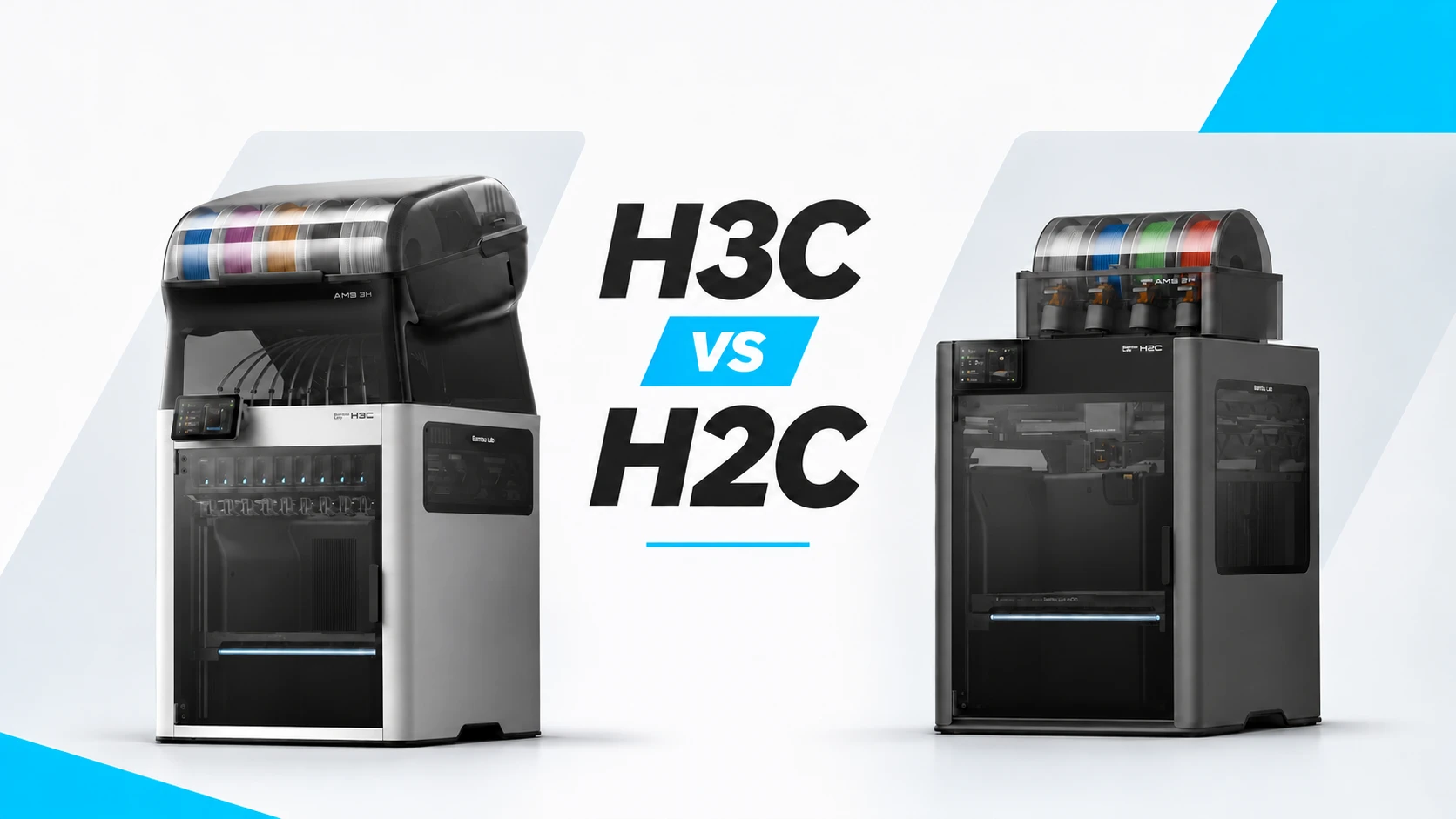
Bambu Lab H3C vs H2C: which 3D printer suits you?
The Bambu Lab H3C Combo and H2C AMS Combo are enclosed 3D printers. Both can combine materials. The key choice is how you want to use them. The H3C has nine interchangeable PrintTools with individual filament paths. The H2C uses Vortek with six interchangeable hotends and a separate left hotend.
Do you change materials often, or want to work with soft TPU 75A? The H3C is interesting. It can also use different nozzle diameters in one print. The H2C is an alternative if Vortek and its available configurations suit your work and budget. The more economical choice also depends on filament and accessories. Include post-processing time in your calculation.
Below we compare the H3C Combo with the H2C AMS Combo. Specifications and contents can vary by package. Always check the product information before ordering.
| Feature | H3C Combo | H2C AMS Combo |
|---|---|---|
| Changing system | Swaptek with nine PrintTools | Vortek with six interchangeable Vortek hotends and a separate left hotend |
| Included AMS | AMS 3H for nine spools | AMS 2 Pro for four spools |
| Drying | Two drying positions, up to 85 °C according to Bambu Lab | Active drying; check conditions for your setup |
| Flexible material | Included PrintTool supports 2.85 mm TPU 75A and other suitable filament | Check compatibility and feeding for each TPU |
| Laser | Check compatibility and required optional accessories | Separate Laser Full Combo packages available |
| Build volume and print area | 330 × 320 × 325 mm | Shared area for both hotends: 300 × 320 mm horizontally; height depends on the hotend |
Check the H3C Combo product information for current pricing, contents and availability.
Material changes: Swaptek versus Vortek
The H3C uses Swaptek. Each PrintTool has its own filament path and heater. The printer works with one tool while the next nozzle can heat up. According to Bambu Lab, a change can take around six seconds under optimal test conditions. Actual time depends on settings, temperature and materials. Read Bambu Lab’s explanation of Swaptek.
The H2C uses Vortek with six interchangeable Vortek hotends and a separate left hotend. A hotend can be assigned to a material. With a suitable setup, the printer can change quickly. Not every hotend change requires a long purge cycle. Results depend on the material arrangement and print file. With a suitable setup, the H2C can use up to seven filaments without purge cleaning on those changes. This requires sufficient filament feeds and compatible hotends.
With a traditional colour change through one nozzle, the previous material must first be replaced. This takes time and can produce purge waste. Both systems aim to reduce that step, but use different mechanisms. The H3C has separate PrintTools with their own paths. Vortek changes hotends on the H2C. Compare not just the number of tools, but how often your designs change materials.
The H3C Combo includes eight 0.4 mm PrintTools for 1.75 mm filament and one 0.4 mm PrintTool for 2.85 mm filament. Suitable extra parts are required for additional nozzle diameters. The H3C supports combining nozzle sizes in one print. Bambu Lab has also announced this feature for the H2C. In its 3 November 2026 schedule, Bambu Lab expects the H2C update in February 2027 without a Filament Track Switch and in March 2027 with one. These are estimates, not guarantees. Check current software and firmware, and read Bambu Lab’s announcement before relying on it.
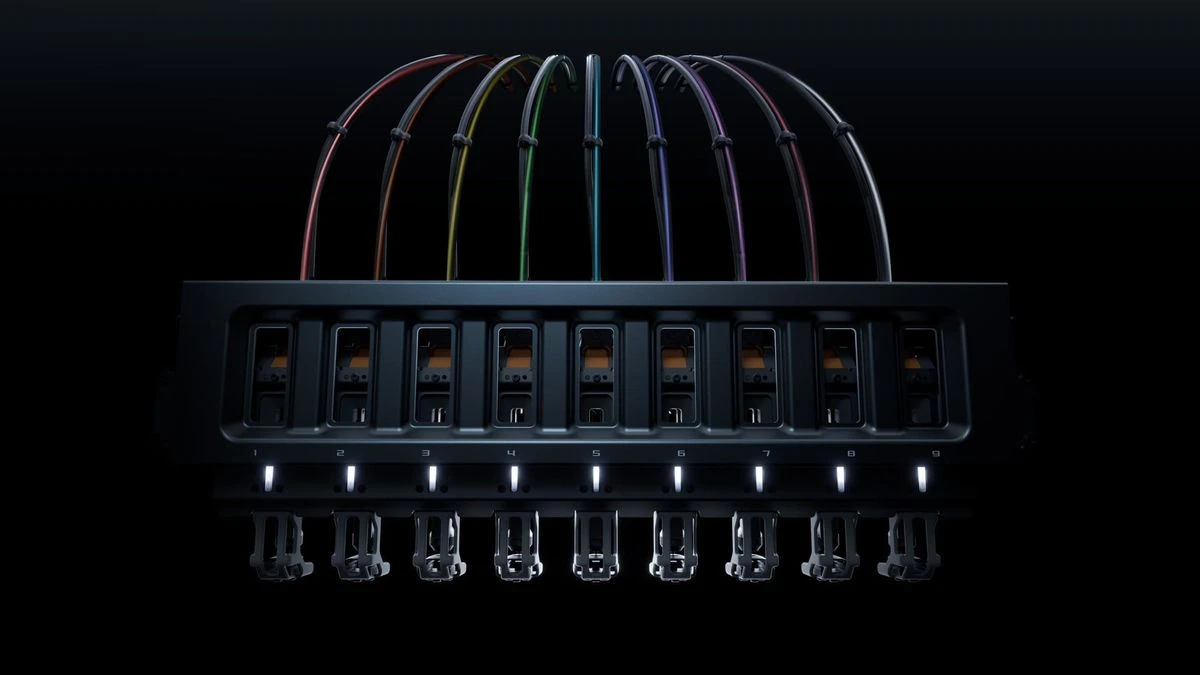
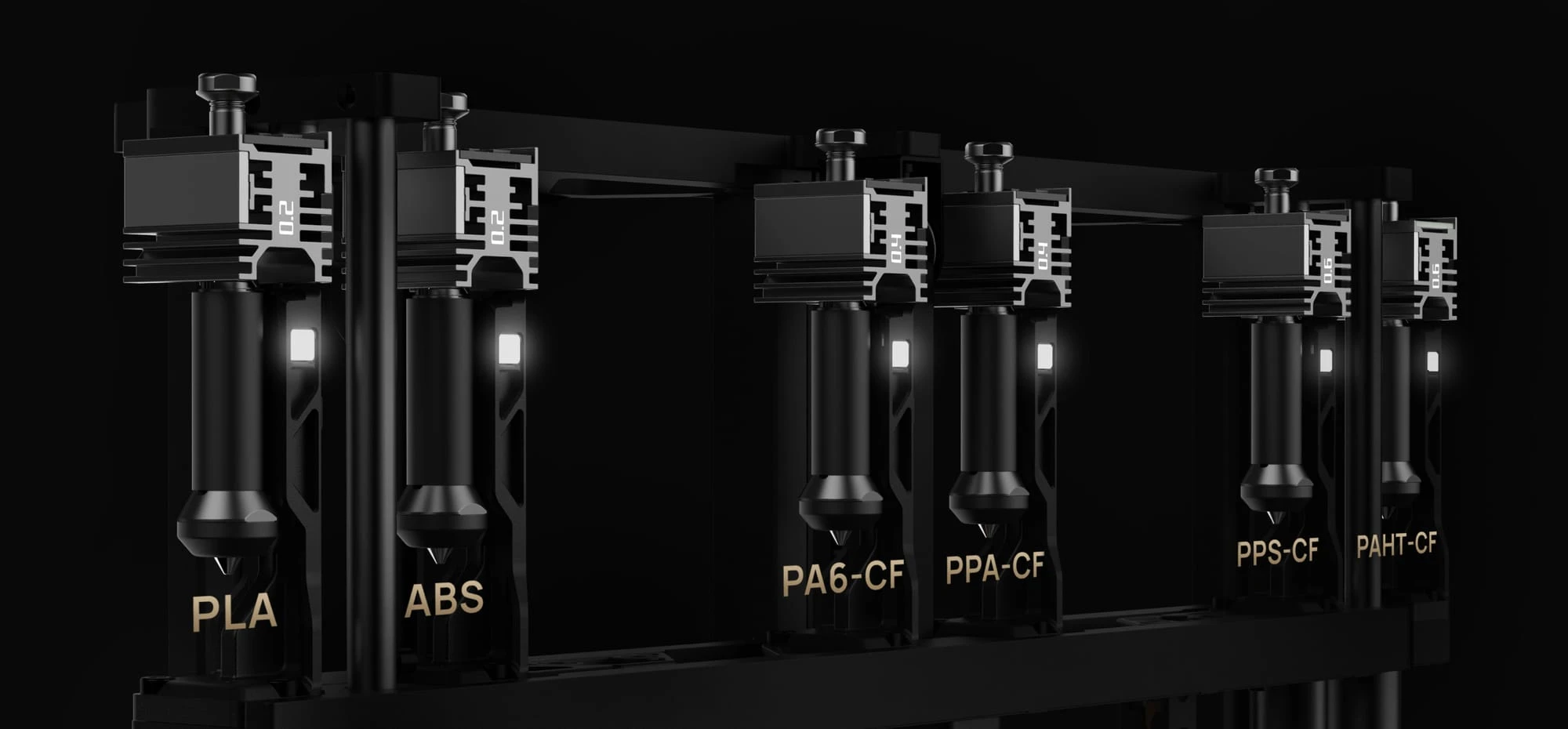
AMS 3H and AMS 2 Pro
The H3C Combo includes the AMS 3H for nine spools. Two positions can actively dry filament. Bambu Lab states that the integrated dryer reaches up to 85 °C. Bambu Lab says drying can also run while the printer is printing, depending on the material and settings. Check the recommended drying temperature and time for each spool.
The H2C AMS Combo includes an AMS 2 Pro for four spools. It also has an active drying function. Options while printing depend on the printer, firmware, setup and power supply. Check those conditions before choosing an extra AMS or power supply.
More spools do not mean you can use every material at once. The standard H3C Combo, for example, has eight tools for 1.75 mm filament and one for 2.85 mm. A different combination may need extra PrintTools. Decide which colours and materials you want to use together and check their diameter. The H3C's FlexFeed extruder supports 1.75 and 2.85 mm filament. The AMS 3H has dedicated bypass openings for suitable TPU. Check which feed path and PrintTool match your filament.
According to Bambu Lab, both printers can use up to 24 filaments in one print with suitable AMS expansions. The H3C connects an extra AMS through a PrintTool. This does not mean it has 24 separate PrintTools. The H2C also needs extra AMS units and a suitable setup. Check the required connections and accessories.
Moisture-sensitive filament needs care whichever printer you choose. Store spools according to their instructions and dry them when needed. Poorly dried material can cause an uneven finish or extrusion. A dryer helps preparation. Always check the settings and material compatibility too.
Which one should you choose?
Do you frequently change materials or want different nozzle diameters in one print? The H3C Combo is a good option. Its included 2.85 mm tool supports materials including soft TPU 75A. Think of a prototype with a rigid housing and soft grip. A small nozzle can make details; a larger one can print the rest. Extra nozzle diameters are sold separately.
The H2C AMS Combo also supports multiple materials. Choose it if Vortek suits your work. Want laser engraving too? Separate H2C Laser Full Combo packages exist. Check the laser and accessories included in each package. Also check which optional accessories are compatible with the H3C.
Compare more than the purchase price. Which materials do you already use? How many colours do you need? Consider the time spent changing and post-processing. Extra features are most useful when used often. A smaller model may be enough for simple single-material objects.
To compare the systems, list three recurring products you want to print. Write down the material, finish, dimensions and support needed for each one. Can the standard package handle them, or do you need extra tools, AMS units or filament? Check before ordering. Ensure good ventilation and follow material safety advice.
For more printer choices, see our Bambu Lab selection guide. Our H3C introduction also explains how the new printer works.
The H3C Combo can be ordered on backorder while it is out of stock.
Look at a complete workflow when comparing the printers. Count the colours you use on a typical model and the number of material changes it needs. Include the cost of any additional tools, spare parts and filament. Consider how much support you remove after printing. These details can matter more than a headline specification when you decide which package suits your daily work. Check the product information for current pricing and availability. Questions about the H2C, materials or accessories? Contact our specialists.